
A Client Story That Made Me Laugh
Post-shower skin hydration is something many people misunderstand. One of my longtime clients told me about a skincare habit she was very proud of.
After taking a shower, she never dried the water off her face.
Her reason?
She believed that if she left the water sitting on her skin long enough, her face would gradually absorb it. Sometimes she would even gently pat the water into her skin to help it “soak in.”
When she explained this to me, I had to smile.
I asked her,
“If your skin absorbs shower water like that, does your whole body absorb the water while you are standing in the shower?”
She stopped for a moment and laughed.
“Okay, maybe not,” she said. “But I still feel like the water on my face is giving my skin moisture.”
This is actually a very common misunderstanding.
Water sitting on the surface of the skin is not the same thing as properly hydrating and moisturizing the skin. In fact, simply allowing water to completely air-dry on your face does not necessarily help your skin stay hydrated.
What you do right after cleansing or showering is much more important.
What I Recommended Instead
I told my client to gently pat her face with a soft towel rather than letting the water completely dry on its own.
There is no need to rub or scrub the skin. Just lightly press or tap the towel against the face until the excess water is removed.
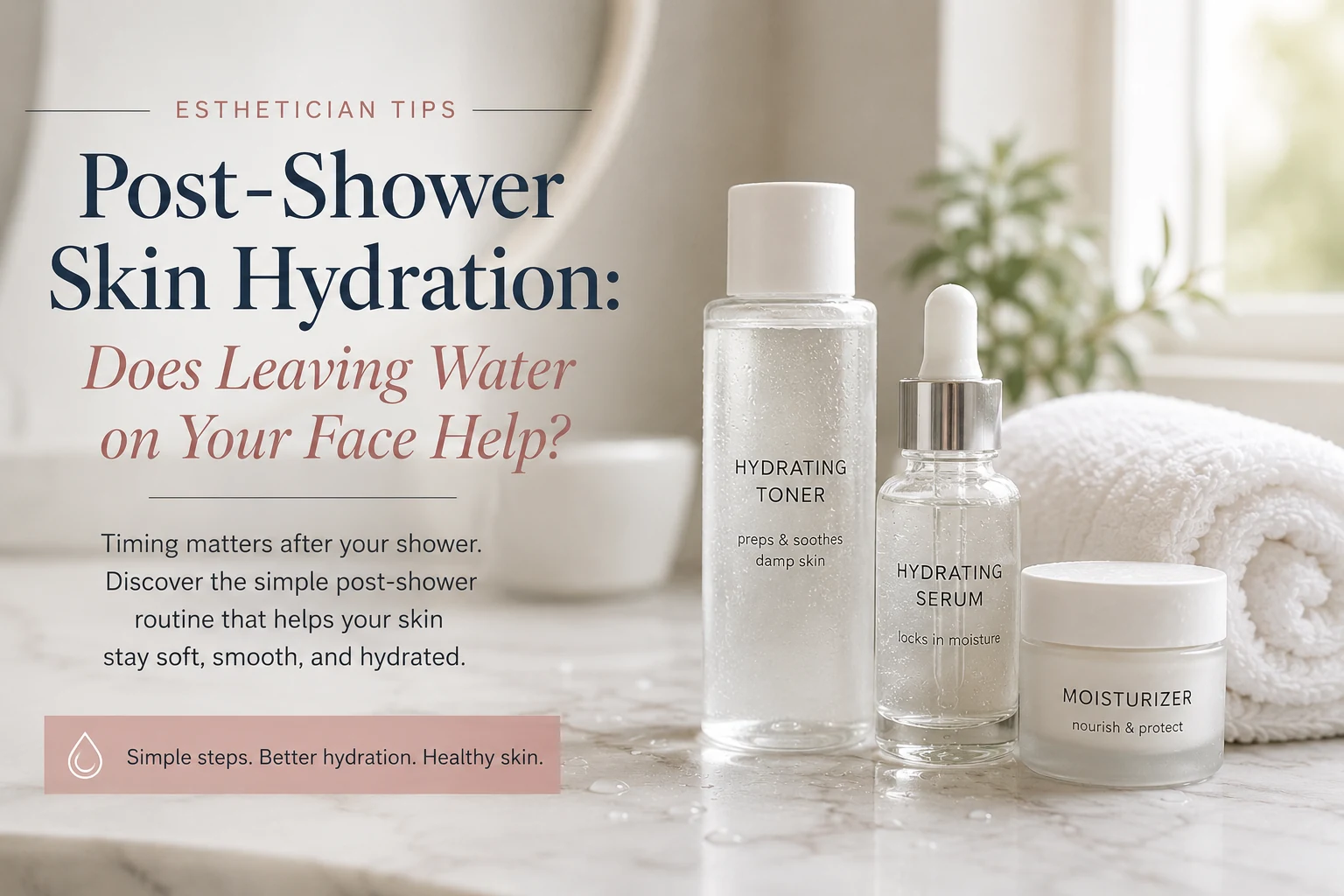
Then, while the skin still feels slightly fresh and comfortable, apply a hydrating toner.
I even suggested keeping the toner in the bathroom so she could use it immediately after her shower instead of waiting until she went into another room and started doing something else.
From there, she can continue with her serum and moisturizer to help support hydration and reduce moisture loss.
For me, this is one of those small changes that can make a skincare routine much more effective without adding five more products.
Sometimes better skincare is not about buying more.
It is simply about using what you already have at the right time.
Why Water on the Surface Is Not the Same as Post-Shower Skin Hydration
It helps to separate two ideas: water sitting on the skin and water being retained within the outer layers of the skin.
After a shower or cleansing, the face may look and feel wet, but that does not mean the skin has become deeply hydrated. The water on the surface can simply evaporate.
And as that water evaporates, some people may notice that familiar tight feeling afterward.
This is especially noticeable when the skin barrier is already dry, irritated, or lacking enough protective lipids.
That is why I do not recommend letting the face stay dripping wet until it completely air-dries.
Instead, I prefer a simple routine:
Gently remove excess water, then apply hydrating skincare while the skin still feels comfortable and slightly damp.
A hydrating toner can be a very useful first step because it gives the skin ingredients designed to support hydration rather than relying on plain shower water alone.
Ingredients such as glycerin, hyaluronic acid, panthenol, and beta-glucan are commonly used in hydrating products because they help attract or support moisture in the skin.
The next step is equally important.
Hydration should usually be followed with a serum, lotion, or moisturizer that helps reduce water loss and leaves the skin feeling softer and more comfortable.
Good post-shower skin hydration is about timing, not leaving plain water on the face.
Esthetician Tip
Think of water as the beginning of the hydration process—not the entire routine.
Leaving shower water on your face is not a substitute for a well-formulated hydrating product and moisturizer.
Why Post-Shower Skin Hydration Timing Matters
One of the biggest mistakes I see is waiting too long after cleansing or showering before applying skincare.
For better post-shower skin hydration, apply your hydrating products before the skin feels completely dry.
People often finish their shower, dry their hair, get dressed, check their phone, and only then remember their face.
By that time, the skin may already feel tight or dry.
That is why I like the idea of keeping a hydrating toner somewhere easy to reach in the bathroom. It makes the routine simple and realistic.
After showering:
- Gently pat away excess water with a soft towel.
- Apply a hydrating toner while the skin still feels slightly damp and comfortable.
- Follow with your serum if you use one.
- Finish with a moisturizer to help reduce moisture loss.
This routine does not need to take long.
The goal is simply to avoid letting the skin become completely dry and uncomfortable before giving it hydration and moisture.
My Esthetician Perspective
Over the years, I have learned that many skincare problems are not always caused by choosing the “wrong” product.
Sometimes the issue is how and when the product is being used.
A good moisturizer applied too late may not feel as comfortable as the same moisturizer used soon after cleansing.
A hydrating toner sitting on a shelf in another room may be easy to forget.
That is why I often recommend making skincare fit naturally into your daily habits.
If you shower every evening, place your toner where you will actually see it.
Good skincare should be effective, but it should also be easy enough to repeat every day.
Can You Apply Skincare to Damp Skin?
Yes, in many cases, slightly damp skin can be a good time to apply hydrating products.
The important word is slightly.
Your face does not need to be dripping wet. If there is too much water on the surface, products can become diluted or slide around instead of applying evenly.
I prefer to gently pat away the excess water first, then apply a hydrating toner while the skin still has a fresh, slightly damp feel.
This can work especially well with humectant ingredients such as:
- Hyaluronic acid
- Glycerin
- Panthenol
- Beta-glucan
- Aloe
- Sodium PCA
These ingredients are commonly used in skincare products designed to support hydration and help the skin feel softer and more comfortable.
After that, I recommend following with a moisturizer.
This final step matters because hydration and moisturization are related, but they are not exactly the same thing.
Hydrating products help add or attract water, while moisturizers help support the skin barrier and reduce moisture loss.
That is why simply leaving shower water on your face is not the same as completing a hydrating skincare routine.
One Important Exception
Not every skincare product should automatically be applied to damp skin.
Certain stronger active ingredients may feel more irritating when applied to wet or very damp skin because penetration can increase.
If you are using products such as retinoids or stronger exfoliating acids, follow the directions for that specific product.
For a simple hydrating toner, serum, and moisturizer routine, however, slightly damp—not dripping wet—skin is often a comfortable place to begin.
What Can Make Skin Feel Even Drier After Showering?
The water left on your face is only one part of the story.
Sometimes the bigger problem is actually the shower itself.
Very hot water can leave the skin feeling more dry, tight, or uncomfortable, especially if you already have dehydrated or sensitive-feeling skin.
Long showers, harsh cleansers, and washing the face more often than necessary can also make that dry feeling more noticeable.
This is why I usually recommend paying attention to the entire routine, not just the product you apply afterward.
A few simple changes can help:
- Use lukewarm rather than very hot water.
- Avoid scrubbing the face with a towel.
- Choose a gentle cleanser that does not leave the skin feeling squeaky-clean.
- Apply hydrating skincare soon after cleansing.
- Finish with a moisturizer that suits your skin type.
“Squeaky Clean” Is Not Always Better
Some people feel that if their face feels tight after washing, it means the cleanser worked very well.
I see it differently.
Clean skin should feel fresh and comfortable—not stripped.
That tight, stretched feeling can be a sign that your routine is removing more than your skin comfortably tolerates.
This is especially important for people who have an oily T-zone but drier cheeks.
They may think they need stronger cleansing because part of the face feels oily, while the drier areas become even more uncomfortable.
In those cases, the goal is not to “dry out” the oily areas.
The goal is to cleanse gently and support balanced hydration across the whole face.
Hydrating Toner vs. Plain Water
This is where many people get confused.
If water is important for hydration, why not just leave water on the face?
Because a hydrating toner is not the same thing as plain tap water.
A well-formulated hydrating toner may contain ingredients that help the skin hold onto moisture and feel more comfortable after cleansing.
Depending on the formula, that may include humectants such as glycerin, hyaluronic acid, panthenol, or beta-glucan, along with other soothing and skin-conditioning ingredients.
Plain water does not provide that same combination.
That does not mean everyone absolutely needs a toner. A good moisturizer applied soon after cleansing can also be enough for many people.
But for someone who enjoys toner or tends to feel dry and tight after showering, a hydrating toner can be a very useful first step.
Choose the Right Kind of Toner
When I say “toner,” I am not talking about a strong, drying formula that leaves the skin feeling stripped.
For this routine, I prefer a gentle, hydrating toner without a harsh after-feel.
The goal is comfort and hydration—not making the skin feel tighter.
If your toner stings, burns, or consistently leaves your face feeling dry, it may not be the right product for this particular purpose.
My Simple Rule
After a shower, I tell my clients:
Pat. Hydrate. Seal.
Pat away the excess water.
Apply your hydrating step.
Then seal everything in with moisturizer.
It is simple, easy to remember, and much more useful than waiting for shower water to “soak into” the face.
Common Questions About Post-Shower Hydration
Should I leave my face wet after cleansing?
You do not need to leave your face dripping wet and wait for the water to disappear.
I prefer gently patting away the excess water with a soft towel and then applying hydrating skincare while the skin still feels slightly damp and comfortable.
Is it bad to let your face air-dry?
It is not automatically harmful, but if your skin regularly feels tight after air-drying, your routine may need a little adjustment.
For dry or dehydrated-feeling skin, applying skincare sooner can often feel more comfortable than waiting until the face is completely dry.
Do I need a toner after every shower?
No.
Toner is optional.
If you enjoy using one, choose a gentle hydrating formula. If you prefer a simpler routine, you can move directly to a serum or moisturizer.
The most important thing is not the number of steps. It is preventing your skin from becoming overly dry and uncomfortable.
Can I use hyaluronic acid on damp skin?
In many routines, hyaluronic acid can be applied when the skin is slightly damp.
But remember that hyaluronic acid is only one part of the routine.
Follow it with a moisturizer so the skin is not relying on a humectant alone.
What if my face still feels tight after moisturizing?
Pay attention to the entire routine.
Very hot water, a strong cleanser, over-cleansing, exfoliating too often, or using products that do not suit your skin can all contribute to that tight feeling.
If the dryness, burning, peeling, or irritation continues or becomes severe, it is a good idea to speak with a dermatologist or another qualified medical professional.
A simple post-shower skin hydration routine can help the skin feel more comfortable after cleansing.
Post-shower skin hydration does not need to involve a long or complicated routine.
Final Thoughts
My client’s idea of “letting the shower water absorb into her face” still makes me smile.
But it also reminded me of something important.
Many skincare habits come from ideas that sound logical at first.
Water equals hydration, so leaving more water on the face must mean more hydration—right?
Not exactly.
Healthy-looking skin is less about leaving water sitting on the surface and more about helping the skin maintain a comfortable moisture balance.
For my client, the solution was simple:
Pat away the excess water, apply a hydrating toner while the skin is still slightly damp, and follow with serum and moisturizer.
No complicated routine.
No waiting for the shower water to “soak in.”
Just better timing and a little more understanding of how skincare works.
And sometimes, one small change like that can make a daily routine much more effective.
Leave a Reply