
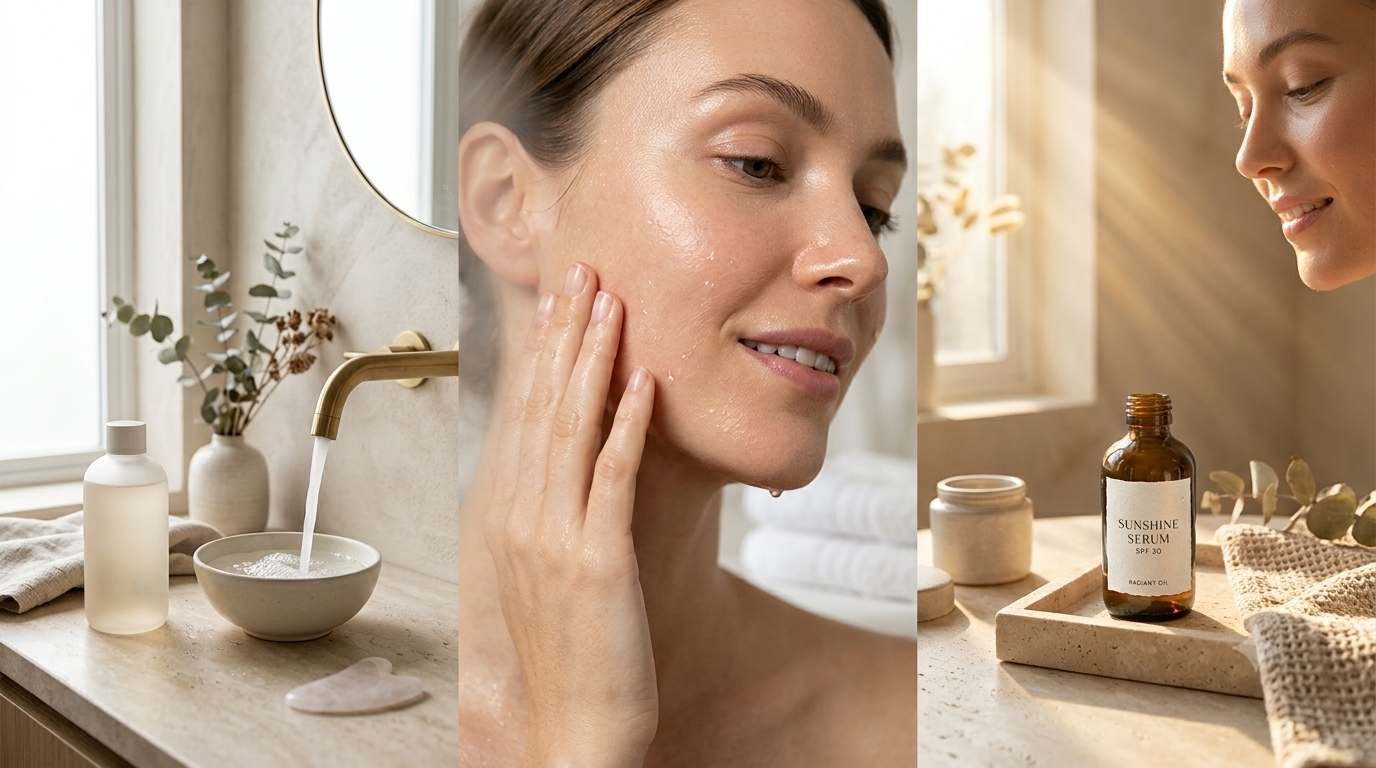
Beautiful, healthy skin isn’t created by using dozens of expensive products or following every new beauty trend. It begins with understanding what your skin truly needs every day.
As a licensed esthetician with over 30 years of professional skincare experience, I’ve learned that the healthiest skin is usually built on simple, consistent habits—not complicated routines.
Many people believe they need a cabinet full of products to achieve glowing skin. In reality, most skin concerns improve when you focus on three essential habits that support your skin’s natural function.
These are the three pillars I recommend to nearly everyone:
- Cleanse
- Hydrate
- Protect
Whether you’re just beginning your skincare journey or looking to simplify your routine, mastering these three pillars will give your skin the strongest foundation for long-term health.
Let’s explore why each one matters.
Pillar One: Cleanse
Why Cleansing Matters
Your skin works around the clock to protect your body. Throughout the day it collects sweat, excess oil, environmental pollutants, sunscreen, makeup, and microscopic debris that can settle on the skin’s surface.
If these impurities aren’t removed, they can contribute to clogged pores, dullness, irritation, and breakouts.
Cleansing is not about making your skin feel squeaky clean. It’s about removing what doesn’t belong while preserving your skin’s natural protective barrier.
Healthy cleansing should leave your skin feeling fresh, comfortable, and balanced—not tight or dry.
Your Skin Barrier Comes First
One of the biggest misconceptions in skincare is that cleansing more often leads to healthier skin.
In fact, over-cleansing is one of the most common mistakes I see.
Your skin barrier is made up of natural lipids, proteins, and moisture that work together to defend against bacteria, pollution, allergens, and water loss. Harsh cleansers or excessive washing can weaken this protective barrier.
When the barrier becomes compromised, you may notice:
- Dryness
- Redness
- Increased sensitivity
- Flaking
- Breakouts
- A tight feeling after washing
Many people mistake these symptoms for “clean skin” when they’re actually signs that the skin is becoming stressed.
Choosing the Right Cleanser
There is no single cleanser that’s perfect for everyone.
Instead, choose a formula based on your skin type.
Dry Skin
Look for creamy or hydrating cleansers that contain ingredients such as glycerin, ceramides, or hyaluronic acid.
Oily Skin
A gentle gel cleanser can effectively remove excess oil without stripping the skin.
Combination Skin
Choose a balanced cleanser that removes impurities while maintaining moisture.
Sensitive Skin
Look for fragrance-free, gentle cleansers with minimal ingredients designed to support the skin barrier.
Morning vs. Evening Cleansing
Your skin has different needs throughout the day.
Morning
A gentle cleanse removes overnight oil, sweat, and skincare residue, preparing your skin for moisturizer and sunscreen.
Evening
Nighttime cleansing is especially important because it removes sunscreen, makeup, excess oil, and environmental pollutants that accumulate throughout the day.
If you wear heavy makeup or water-resistant sunscreen, double cleansing may be beneficial. However, it isn’t necessary for everyone. Your routine should always match your lifestyle and your skin’s needs—not social media trends.
Angie’s Professional Insight
One lesson I’ve learned after decades of treating many different skin types is this:
Many people don’t need more skincare products—they need a better skincare routine.
A gentle cleanser used consistently is often more effective than switching products every few weeks in search of a miracle.
Healthy skin responds best to consistency, patience, and understanding.
Pillar Two: Hydrate
Hydration Is More Than Just Drinking Water
Many people believe that drinking more water alone will solve dry skin. While staying hydrated is important for your overall health, it doesn’t automatically provide enough moisture to your skin.
Healthy skin depends on two things:
- Hydration, which refers to the water content within the skin.
- Moisture, which helps keep that water from evaporating.
Think of your skin like a sponge. A damp sponge stays soft and flexible, but if it’s left uncovered, the water quickly evaporates and it becomes dry and brittle. Your skin works in much the same way.
A well-formulated moisturizer helps your skin hold on to hydration, keeping it comfortable, resilient, and healthy.
Understanding Your Skin Barrier
Your skin barrier is your body’s first line of defense. It protects against pollution, bacteria, allergens, and environmental stress while preventing excessive water loss.
When this barrier is healthy, your skin feels smooth, balanced, and comfortable.
When it’s damaged, you may experience:
- Dryness
- Tightness
- Flaking
- Redness
- Increased sensitivity
- Frequent breakouts
Ironically, even oily skin can become dehydrated if the skin barrier is compromised.
One of the biggest misconceptions I see is people treating oily skin by using stronger cleansers or skipping moisturizer. This often makes the problem worse because the skin responds by producing even more oil to compensate.
Ingredients That Truly Support Hydration
The skincare industry is filled with marketing claims, but a few well-researched ingredients consistently help support healthy, hydrated skin.
Hyaluronic Acid
Hyaluronic acid attracts and holds water within the skin, helping it appear smoother and more supple. It works best when followed by a moisturizer that helps lock in hydration.
Glycerin
Glycerin is one of the most effective and affordable humectants available. It draws moisture to the skin and helps improve long-term hydration without feeling heavy.
Ceramides
Ceramides are natural lipids found in the skin barrier. They help strengthen the barrier and reduce moisture loss, making them especially beneficial for dry or sensitive skin.
Squalane
Squalane is a lightweight emollient that softens the skin and helps prevent moisture loss without leaving a greasy finish. It works well for many skin types, including combination skin.
Rather than chasing trendy ingredients, focus on products that contain proven, barrier-supporting ingredients and use them consistently.
Does Every Skin Type Need Moisturizer?
The answer is yes.
The type of moisturizer may vary, but every skin type benefits from maintaining a healthy moisture balance.
- Dry skin often needs richer creams with ceramides or nourishing oils.
- Oily skin usually does best with lightweight gels or lotions.
- Combination skin benefits from balanced formulas that hydrate without feeling heavy.
- Sensitive skin often responds best to fragrance-free products with minimal ingredients.
Choosing the right texture is often more important than choosing the most expensive product.
Angie’s Professional Insight
Over the years, I’ve met countless clients who believed their skin was “too oily” for moisturizer.
In reality, many of them had dehydrated skin caused by over-cleansing or using harsh products.
Once we introduced a gentle cleanser and a lightweight moisturizer, their skin became more balanced, comfortable, and less oily over time.
Healthy skin is rarely about removing more. It’s about supporting what your skin naturally does best.
A Simple Hydration Routine
Keeping your skin hydrated doesn’t require a complicated routine.
Each morning:
- Cleanse gently.
- Apply a hydrating serum if needed.
- Use a moisturizer suited to your skin type.
- Finish with sunscreen.
Each evening:
- Remove makeup and sunscreen.
- Cleanse gently.
- Apply treatment products if you’re using them.
- Finish with a nourishing moisturizer to help support overnight skin repair.
Consistency matters far more than the numPillar Three: Protect
Why Sun Protection Is the Most Important Step in Your Routine
If I could recommend just one skincare habit to every client, it would be this:
Wear sunscreen every single day.
Over more than three decades in skincare, I’ve seen remarkable improvements from many products—but nothing has a greater impact on long-term skin health than consistent sun protection.
People often associate sunscreen with beach vacations or hot summer days. In reality, ultraviolet (UV) radiation reaches your skin year-round, even on cloudy days and through car windows.
Every time your skin is exposed to UV rays without protection, small amounts of damage accumulate. You may not notice it today, but over time, that damage becomes visible.
Daily sunscreen isn’t just about preventing sunburn. It’s one of the most effective ways to protect your skin’s future.
Understanding UVA and UVB Rays
Not all ultraviolet rays affect your skin in the same way.
UVA
UVA rays penetrate deeper into the skin and are present throughout the year. They play a major role in:
- Premature aging
- Fine lines and wrinkles
- Loss of firmness
- Hyperpigmentation
- Collagen breakdown
Because UVA rays can pass through clouds and glass, your skin is exposed even while driving or sitting near a sunny window.
UVB
UVB rays primarily affect the outer layer of the skin and are responsible for sunburn. They are generally stronger during the warmer months and peak daylight hours.
Both UVA and UVB contribute to skin damage, which is why choosing a broad-spectrum sunscreen is essential.
What Is Photoaging?
Many people assume wrinkles are simply part of getting older.
While natural aging is unavoidable, a significant portion of visible skin aging comes from repeated sun exposure—a process known as photoaging.
Photoaging can lead to:
- Uneven skin tone
- Dark spots
- Fine lines
- Deeper wrinkles
- Rough texture
- Loss of elasticity
The encouraging news is that many of these changes are largely preventable with daily sun protection.
Think of sunscreen as an investment. Every application helps protect the collagen and elastin your skin will rely on in the years ahead.
Choosing the Right Sunscreen
Finding the right sunscreen doesn’t have to be complicated.
Look for these key features:
- Broad-spectrum protection
- SPF 30 or higher for everyday use
- A texture you’ll enjoy wearing consistently
Whether you prefer a lightweight fluid, a hydrating cream, or a mineral formula, the best sunscreen is the one you’ll apply every morning.
Many excellent sunscreens are available at different price points. Expensive doesn’t always mean better.
Common Sunscreen Mistakes
Even people who use sunscreen regularly often make small mistakes that reduce its effectiveness.
Applying Too Little
Most adults need about a nickel-sized amount for the face and neck (or roughly two finger lengths of sunscreen). Using less can significantly reduce the protection you receive.
Forgetting Key Areas
Don’t overlook your:
- Neck
- Ears
- Hairline
- Around the eyes (using a product suitable for that area)
- Hands, especially if you spend time driving
These areas often show signs of aging first.
Only Wearing Sunscreen on Sunny Days
UV rays don’t disappear when the weather changes. Even on overcast days, UVA rays continue to reach your skin.
Making sunscreen part of your daily morning routine is much easier than deciding whether you “need it” each day.
The Three Pillars Work Together
Think of these three pillars as a team.
Cleanse prepares your skin by removing impurities without disrupting its natural barrier.
Hydrate replenishes moisture and helps strengthen the skin barrier so your skin can function at its best.
Protect shields your skin from the daily environmental stress that accelerates premature aging.
When one pillar is missing, the others can’t perform as effectively.
Healthy skin isn’t built by relying on a single miracle product. It’s the result of simple, consistent habits practiced day after day.
Angie’s Professional Tips
Throughout my career, one lesson has remained true:
The healthiest skin rarely belongs to the person with the most products.
It belongs to the person who understands their skin and follows a routine consistently.
I’ve seen clients transform their skin not by purchasing an entirely new skincare collection, but by simplifying their routine, protecting their skin barrier, and wearing sunscreen every day.
Healthy skin is a long-term relationship with yourself. Patience and consistency will always deliver better results than chasing every new trend.
Common Skincare Mistakes to Avoid
Even the best products can’t compensate for habits that weaken your skin over time. Here are some of the most common mistakes I see:
- Washing your face too often or using harsh cleansers
- Skipping moisturizer because your skin feels oily
- Saving sunscreen for vacations instead of wearing it daily
- Introducing too many new products at once
- Expecting instant results instead of allowing your skin time to adjust
A simple, well-balanced routine is often far more effective than an overly complicated one.
A Simple Daily Routine
Morning
- Gentle Cleanser
- Hydrating Serum (optional)
- Moisturizer
- Broad-Spectrum SPF 30+
Evening
- Remove Makeup and Sunscreen
- Gentle Cleanser
- Treatment Product (if needed)
- Moisturizer
Remember, consistency matters more than perfection.
Frequently Asked Questions
Is a 10-step skincare routine necessary?
No. Most people don’t need a complicated skincare routine to achieve healthy skin. A simple routine focused on cleansing, hydration, and daily sun protection provides everything your skin needs. Consistency is far more important than the number of products you use.
Can oily skin skip moisturizer?
No. Oily skin can still become dehydrated, especially if you use harsh cleansers or acne treatments. A lightweight, non-comedogenic moisturizer helps support your skin barrier and may even reduce excess oil production over time.
How often should I wash my face?
For most people, cleansing twice a day—once in the morning and once in the evening—is enough. Over-cleansing can weaken your skin barrier, leading to dryness, irritation, and increased sensitivity. Choose a gentle cleanser that matches your skin type.
Do I really need sunscreen on cloudy days?
Yes. Up to 80% of UV rays can penetrate clouds, and UVA rays are present throughout the year. Daily use of a broad-spectrum sunscreen with SPF 30 or higher helps protect your skin from premature aging, dark spots, and long-term sun damage—even when the sun isn’t visible.
How long does it take to see results from a skincare routine?
Healthy skin takes time. While some people notice improvements within a few weeks, most skincare routines require 4 to 8 weeks of consistent use before significant changes become visible. Patience and consistency are the keys to long-term results.
What’s the most important skincare product?
If you could choose only one product, make it broad-spectrum sunscreen. Daily sun protection is one of the most effective ways to prevent premature aging, protect collagen, reduce hyperpigmentation, and maintain healthy skin for years to come.
Final Thoughts
Healthy skin doesn’t happen overnight.
It isn’t created by one expensive cream or the latest social media trend.
It is built through small, intentional choices that you make every day.
When you focus on the three pillars—Cleanse, Hydrate, and Protect—you create a routine that supports your skin through every season of life.
Start with the basics. Stay consistent. Listen to your skin.
Over time, those simple daily habits can make a remarkable difference.
At MyezBeauty, my goal is to help you understand your skin with confidence, make informed choices, and enjoy skincare as a form of self-care rather than a source of confusion.
Because beautiful skin isn’t about perfection.
It’s about healthy skin, cared for with knowledge and consistency.
About the Author
Angie is a licensed esthetician with more than 30 years of professional skincare experience and a former Lancôme Beauty Advisor. Through MyezBeauty, she shares practical skincare education, honest product insights, and evidence-based beauty guidance to help readers build healthier skin with confidence.

Leave a Reply