
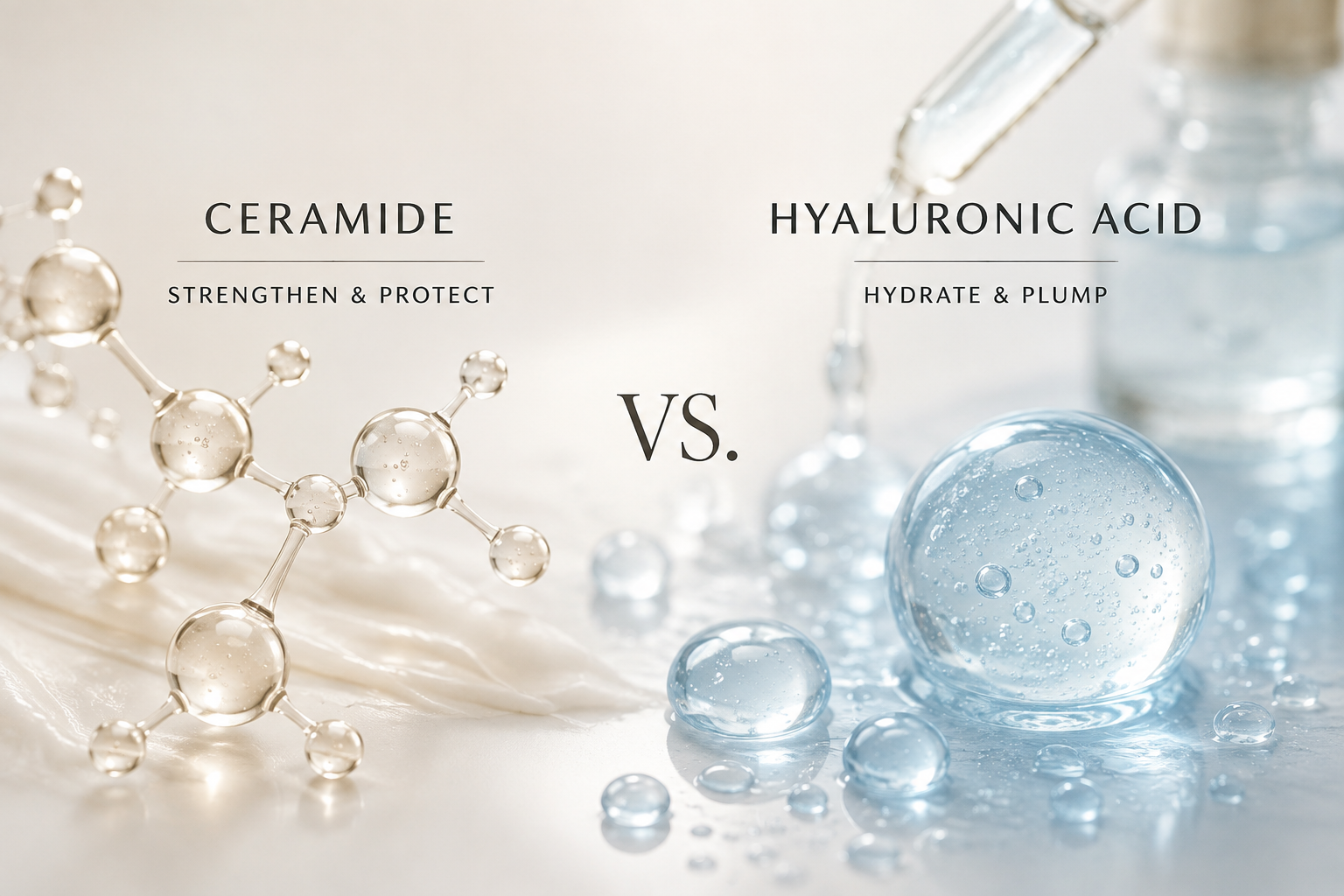
If you’ve ever searched for skincare products to repair dry skin or strengthen your skin barrier, you’ve probably seen two ingredients mentioned again and again: ceramides and hyaluronic acid.
Many people assume they do the same thing because both are associated with hydration. In reality, they work in completely different ways—and understanding that difference can transform your skincare routine.
As a licensed esthetician with more than 30 years of experience, I’ve found that one of the most common skincare mistakes is relying on only one of these ingredients. Healthy skin isn’t just about adding moisture; it’s also about keeping that moisture where it belongs.
In this guide, you’ll learn what ceramides and hyaluronic acid actually do, when to use each one, and why combining them often delivers the best results for healthy, resilient skin.
What Are Ceramides?
Ceramides are natural lipids (fats) that make up nearly 50% of your skin’s outer protective barrier. Think of your skin barrier as a brick wall: skin cells are the bricks, and ceramides are the mortar that holds everything together.
When your skin contains enough ceramides, it stays smooth, strong, and better protected against environmental stressors. A healthy skin barrier also prevents excessive water loss, helping your skin remain hydrated and comfortable throughout the day.
Unfortunately, ceramide levels naturally decline with age. Frequent cleansing, harsh skincare products, over-exfoliation, sun exposure, and cold weather can also reduce the skin’s natural ceramide content. As ceramides decrease, the skin barrier becomes weaker, making the skin more prone to dryness, irritation, redness, and sensitivity.
For people experiencing a damaged skin barrier, incorporating ceramide-rich skincare products can help replenish these essential lipids and support the skin’s natural repair process. While results are not instant, consistent use over time can help improve the skin’s resilience and reduce moisture loss.
Signs Your Skin May Need Ceramides
If your skin often feels dry, tight, or easily irritated, your skin barrier may need additional support. Common signs include:
- Persistent dryness
- Flaky or rough skin
- Increased sensitivity
- Redness after cleansing
- Stinging when applying skincare products
- A weakened skin barrier after over-exfoliation
If several of these symptoms sound familiar, ceramide-based moisturizers may become an important part of your daily skincare routine.
What Is Hyaluronic Acid?
Unlike ceramides, hyaluronic acid doesn’t strengthen the skin barrier directly. Instead, it acts as a powerful humectant—a type of ingredient that attracts and holds water.
In fact, hyaluronic acid can bind up to 1,000 times its weight in water, making it one of the most effective hydrating ingredients used in modern skincare. When applied correctly, it helps the skin appear plumper, smoother, and more refreshed by increasing moisture levels in the upper layers of the skin.
Despite its name, hyaluronic acid is not an exfoliating acid like glycolic acid or salicylic acid. It is naturally found in the skin, joints, and connective tissues, where it plays an essential role in maintaining hydration and flexibility.
As we age, the amount of naturally occurring hyaluronic acid in our skin gradually decreases. This decline can contribute to dehydration, fine lines, and a loss of skin elasticity. Adding hyaluronic acid to your skincare routine can help replenish surface hydration and improve your skin’s overall appearance.
For the best results, apply hyaluronic acid to slightly damp skin and follow with a moisturizer. This helps lock in the water that hyaluronic acid attracts, preventing moisture from evaporating.
Signs Your Skin May Benefit from Hyaluronic Acid
Your skin may benefit from hyaluronic acid if you notice:
- Dehydrated skin that feels tight but appears oily
- Fine lines that become more noticeable when your skin is dry
- A dull or tired-looking complexion
- Skin that loses moisture quickly throughout the day
- Makeup that looks patchy because of dehydration
Hyaluronic acid is suitable for nearly every skin type, including dry, oily, combination, and sensitive skin. Because it provides hydration without adding oil, it is especially popular among people who want lightweight moisture.
Ceramide vs. Hyaluronic Acid: What’s the Difference?
Although both ingredients support healthy skin, they perform very different roles.
| Ceramides | Hyaluronic Acid |
|---|---|
| Strengthen the skin barrier | Increase skin hydration |
| Reduce moisture loss | Attract and hold water |
| Help repair damaged skin | Improve skin plumpness |
| Best for dry and sensitive skin | Suitable for all skin types |
| Lock moisture in | Draw moisture into the skin |
The easiest way to remember the difference is this:
Hyaluronic acid brings water into the skin, while ceramides help keep that water from escaping.
Rather than choosing one over the other, most people achieve the healthiest skin by using both ingredients together.
Should You Use Ceramides and Hyaluronic Acid Together?
The short answer is yes. In fact, these two ingredients complement each other beautifully and are often recommended together by dermatologists and skincare professionals.
Think of hyaluronic acid as the ingredient that draws moisture into your skin, while ceramides seal that moisture in by reinforcing your skin’s natural protective barrier. Used together, they help create skin that feels hydrated, comfortable, and more resilient.
This combination is especially beneficial if you have:
- Dry or dehydrated skin
- A damaged skin barrier
- Sensitive skin
- Mature skin
- Skin that feels tight after cleansing
- Fine lines caused by dehydration
Many moisturizers now contain both ingredients, making it easier than ever to simplify your skincare routine while supporting long-term skin health.
How to Layer Ceramides and Hyaluronic Acid
Using these ingredients in the correct order can maximize their benefits.
Morning Routine
- Cleanse with a gentle cleanser.
- Apply a hyaluronic acid serum to slightly damp skin.
- Follow with a ceramide-rich moisturizer.
- Finish with a broad-spectrum sunscreen (SPF 30 or higher).
Evening Routine
- Remove makeup and cleanse gently.
- Apply your hydrating serum.
- Seal in hydration with a ceramide moisturizer.
- If your skin barrier is severely compromised, consider applying a thin layer of petroleum jelly as the final step to help reduce overnight moisture loss.
Consistency matters more than using many products. A simple routine followed every day often delivers better results than an elaborate routine used only occasionally.
Angie’s Professional Tip
As a licensed esthetician with more than 30 years of experience, I’ve found that many people focus on adding hydration without repairing the skin barrier. When the barrier is weakened, even the best hydrating products can’t perform at their full potential.
I recommend thinking of hyaluronic acid as the ingredient that replenishes moisture and ceramides as the ingredient that protects that investment. Together, they help create healthier, stronger skin over time.
Common Mistakes to Avoid
Even excellent ingredients can be less effective when used incorrectly. Here are a few common mistakes:
- Applying hyaluronic acid to completely dry skin.
- Skipping moisturizer after a hydrating serum.
- Over-exfoliating while trying to repair the skin barrier.
- Expecting overnight results instead of consistent improvement.
- Using too many active ingredients at the same time.
Healthy skin improves gradually through consistency rather than quick fixes.
Frequently Asked Questions
Can I use ceramides and hyaluronic acid every day?
Yes. Both ingredients are gentle enough for daily use and are suitable for most skin types. In fact, consistent daily use often provides the best long-term results for maintaining a healthy skin barrier and hydrated skin.
Which ingredient should I apply first?
Apply hyaluronic acid first on slightly damp skin, then follow with a ceramide-rich moisturizer. This allows hyaluronic acid to attract moisture while ceramides help lock it into the skin.
Are ceramides better for sensitive skin?
Ceramides are especially beneficial for sensitive or compromised skin because they help strengthen the skin barrier and reduce moisture loss. Many fragrance-free moisturizers designed for sensitive skin include ceramides as a key ingredient.
Can oily skin benefit from ceramides?
Absolutely. Oily skin still needs a healthy skin barrier. Lightweight moisturizers containing ceramides can help support the barrier without making the skin feel greasy.
Do I need both ingredients?
For most people, yes. Hyaluronic acid provides hydration, while ceramides help protect and retain that hydration. Together, they create a balanced skincare routine that supports healthier, more resilient skin.
Final Thoughts
When it comes to healthy skin, choosing between ceramides and hyaluronic acid isn’t really the right question. These ingredients aren’t competitors—they’re partners.
Hyaluronic acid helps replenish moisture, while ceramides reinforce your skin’s natural barrier to keep that moisture where it belongs. Together, they create the ideal foundation for smoother, stronger, and healthier-looking skin.
If your skin feels dry, tight, or easily irritated, adding both ingredients to your daily routine can make a noticeable difference over time. The key is consistency. Healthy skin isn’t built overnight, but with the right ingredients and a simple routine, you can support your skin’s natural ability to repair and protect itself.
At MyezBeauty, we believe skincare should be based on education, not trends. This philosophy is one of the reasons Korean skincare has earned worldwide recognition for its focus on long-term skin health. Understanding how ingredients work empowers you to make better choices for your skin—today and for years to come.
Leave a Reply