
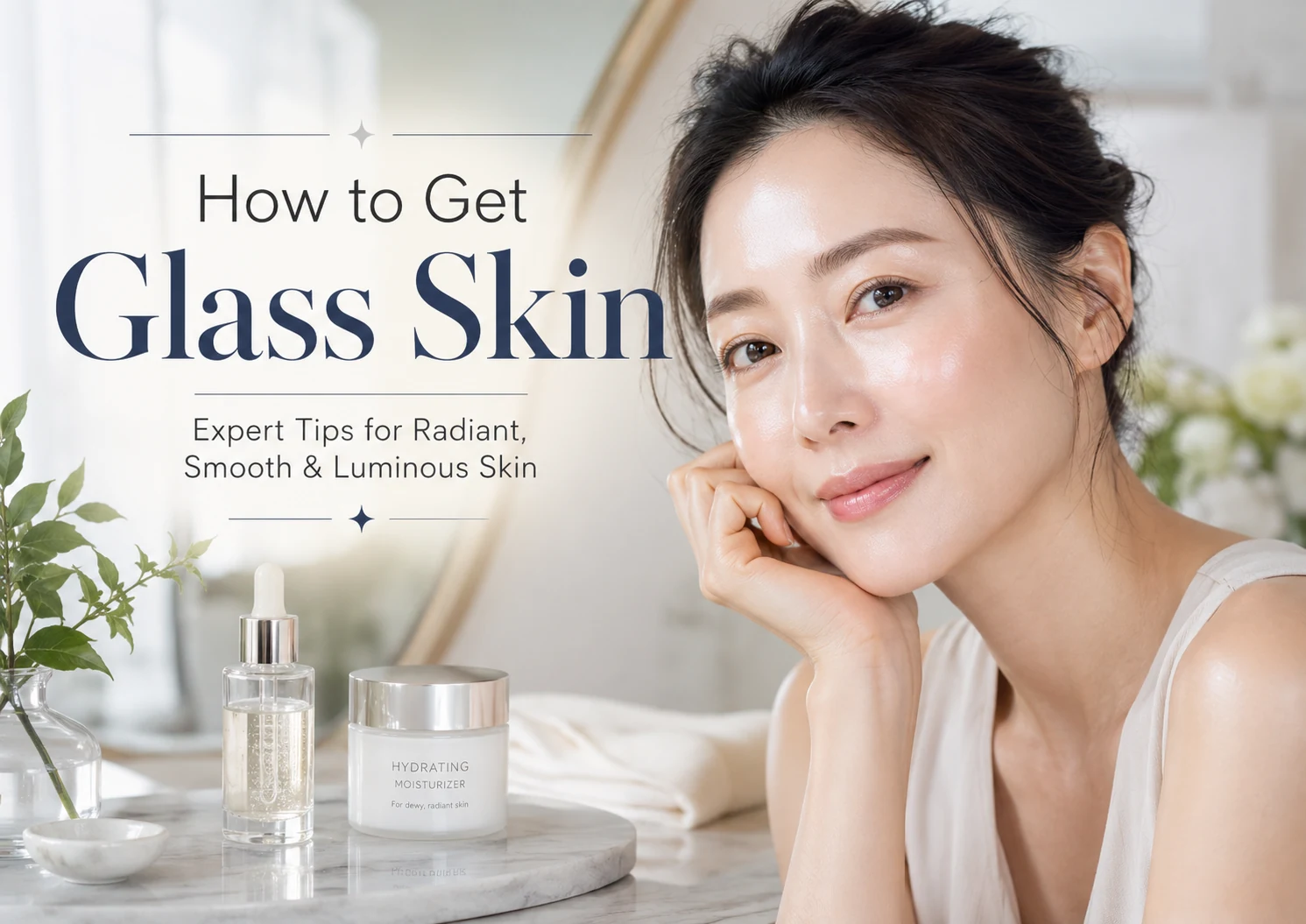
Recently, one of my clients came back from a month-long business trip to Korea and China, and during her facial she asked me how to get glass skin like the women she had seen during her trip.
When she came in for her facial, she started telling me about the trip. Then she asked me a question I hear more and more often:
“How do Korean women get their skin to look so good? How can I get glass skin like that?”
Her own skin was actually in fairly good condition. She had some visible pores, but not many deep wrinkles. Her skin was not excessively oily or extremely dry, and overall it was fairly balanced.
So I explained something important to her:
Glass skin is not something you create overnight. It comes from consistent skincare, hydration, and patience.
The smooth, luminous look people often associate with Korean glass skin usually does not come from one miracle product. It is built over time with regular use of hydrating serums, moisturizers, gentle exfoliation, masks when needed, and daily sun protection.
In this guide, I’ll explain how to get glass skin in a realistic way, what actually makes skin look more luminous, and which skincare habits matter most.
What Is Glass Skin, Really?
Glass skin is a beauty term used to describe skin that looks smooth, hydrated, clear, and naturally luminous.
It does not mean that the skin has no pores, no texture, or no fine lines. Real skin always has some texture.
What creates the glass-like appearance is usually a combination of good hydration, a smooth skin surface, and an even-looking complexion that reflects light well.
That is why I prefer to think of glass skin as healthy-looking, well-hydrated skin rather than perfect skin.
When people try too hard to erase every pore or rough area, they often end up over-exfoliating or using too many strong products. That can leave the skin feeling irritated, dry, or sensitive.
For me, the goal is not perfection.
The goal is skin that looks comfortable, balanced, hydrated, and naturally radiant.
How to Get Glass Skin Starts With Consistency
When clients ask me how to get glass skin, I usually do not start by recommending one specific product.
I start with consistency.
You can own an expensive serum, moisturizer, toner, or mask, but using them only once in a while will not create lasting results.
A simple routine followed regularly is often more effective than a complicated routine that is difficult to maintain.
For most people, the foundation of a glass skin routine includes:
- Gentle cleansing
- Regular hydration
- A serum or ampoule suited to the skin
- Moisturizer
- Gentle exfoliation when appropriate
- Hydrating masks as an occasional extra step
- Daily sunscreen
You do not need a 10-step routine.
What matters most is choosing products that work well for your skin and using them consistently over time.
That is the same advice I gave my client after her trip.
Healthy-looking glass skin is built little by little through daily care.
How to Get Glass Skin With Better Hydration
If I had to choose one thing that matters most for a glass skin look, it would be hydration.
When the skin is dehydrated, it can look dull, rough, or tired, and fine lines may appear more noticeable. Well-hydrated skin tends to look softer, smoother, and more luminous.
This is why I often recommend layering hydration instead of relying on one heavy product.
A simple hydrating routine may include:
- A gentle toner or essence
- A hydrating serum or ampoule
- A moisturizer to help seal in hydration
Ingredients such as hyaluronic acid, glycerin, panthenol, and ceramides can be useful depending on your skin’s needs.
You do not need every hydrating ingredient in one routine. The goal is to keep the skin comfortable and well moisturized without making the routine too complicated.
Esthetician Tip
After cleansing, I prefer to apply hydrating products before the skin feels completely dry.
Applying a hydrating toner or serum while the skin still feels slightly damp can help the routine feel more comfortable, and following with moisturizer helps lock in that hydration.
For glass skin, hydration is not a one-time treatment.
It is something you support every day.
Serums and Ampoules Can Make a Difference
Serums and ampoules can be especially helpful when you are trying to improve the look of hydration, brightness, and overall skin texture.
I personally like these products because they make it easier to adjust a routine based on what the skin seems to need at that time.
But using more serums does not always mean better results.
For a glass skin routine, it is often better to choose one or two products with a clear purpose.
For Hydration
Look for ingredients such as:
- Hyaluronic acid
- Glycerin
- Panthenol
These ingredients can help the skin feel softer and more hydrated.
For a Brighter-Looking Complexion
Ingredients such as niacinamide or vitamin C may help support a more even and radiant appearance when they are suitable for your skin.
For Barrier Support
Products containing ceramides or peptides can be useful when the goal is to keep the skin feeling comfortable, smooth, and resilient.
For Calming
Ingredients such as centella asiatica and panthenol are commonly used in soothing formulas and may be helpful when the skin feels stressed.
The key is not to layer every active ingredient at once.
Choose products based on your skin condition, introduce them gradually, and pay attention to how your skin responds.
Esthetician Tip
In my experience, a well-chosen serum used consistently is usually more helpful than constantly changing products.
For glass skin, the goal is steady improvement in hydration and skin comfort—not chasing an instant shine.
Moisturizer Helps Seal In Hydration
One common mistake I see is focusing so much on serums that moisturizer becomes an afterthought.
Serums can add hydration and targeted ingredients, but moisturizer helps support the skin by reducing moisture loss and keeping the surface feeling soft and comfortable.
For glass skin, the right moisturizer does not need to feel heavy.
The texture should match your skin.
If Your Skin Is Oily or Combination
A lightweight lotion or gel-cream may feel more comfortable.
If Your Skin Is Normal to Dry
A creamier moisturizer may provide the extra comfort and softness your skin needs.
The goal is to create a smooth, hydrated finish without making the skin feel greasy or overloaded.
Esthetician Tip
After applying serum, give it a little time to settle into the skin, then follow with moisturizer.
I often tell clients that serum gives the skin targeted support, while moisturizer helps hold the routine together.
For a healthy glass skin look, you usually need both hydration and a good moisturizing step.
Gentle Exfoliation Can Improve Surface Smoothness
Smooth skin reflects light better, which is one reason gentle exfoliation can help support a glass skin look.
But exfoliation is also one of the easiest steps to overdo.
Using scrubs, exfoliating acids, retinoids, or exfoliating pads too often can leave the skin feeling dry, tight, or irritated. Instead of creating glow, over-exfoliation can make the skin look uneven and uncomfortable.
For many people, gentle exfoliation once or twice a week may be enough, depending on the product and the skin’s tolerance.
Ingredients such as AHA, BHA, or PHA may be used in different types of exfoliating products, but they should be introduced carefully.
Esthetician Tip
If your skin starts to sting, feel unusually tight, or look irritated, do not keep exfoliating just because you want smoother skin.
Glass skin should come from healthy-looking, comfortable skin—not from constantly stripping the surface.
A little exfoliation can help with smoothness, but hydration and barrier care should always stay at the center of the routine.
how to get glass skin: Hydrating Masks Are an Extra Step
Hydrating masks can be a nice addition to a glass skin routine, especially when the skin feels dry, tired, or in need of extra moisture.
Sheet masks, gel masks, and wash-off hydrating masks can temporarily make the skin feel softer and look more refreshed.
But I do not consider masks the foundation of glass skin.
Using a mask once a week will not replace a consistent daily routine.
What matters more is what you do every day with your cleanser, serum, moisturizer, and sunscreen.
Esthetician Tip
I like to think of a hydrating mask as a boost, not a rescue treatment.
If your skin is already being cared for consistently, a mask can give it an extra hydrated look before a special event or whenever it feels a little dull.
But the real glow comes from regular skincare habits over time.
how to get glass skin: Sunscreen Is Essential for Maintaining Glass Skin
Daily sunscreen is one of the most important steps if you want to maintain a smooth, even-looking, healthy complexion.
You can spend time choosing good serums, moisturizers, and masks, but repeated sun exposure can still contribute to dryness, uneven-looking tone, and visible signs of premature skin aging.
That is why I always include sunscreen when I talk about how to get glass skin.
Choose a broad-spectrum sunscreen that feels comfortable enough to wear every day, and reapply when appropriate, especially if you are spending extended time outdoors.
Esthetician Tip
Glass skin is not about making the face look shiny.
It is about creating skin that looks hydrated, balanced, and well cared for.
Protecting that progress with daily sunscreen is just as important as the products you apply underneath it.
how to get glass skin: A Simple Morning Routine
A glass skin routine does not have to be complicated.
For most people, a simple morning routine can focus on hydration, comfort, and sun protection.
Step 1: Gentle Cleanser
Use a cleanser that removes excess oil and residue without leaving the skin feeling tight or stripped.
Step 2: Hydrating Toner or Essence
This step is optional, but it can provide an extra layer of hydration and help prepare the skin for serum.
Step 3: Serum or Ampoule
Choose one based on your main skin goal, such as hydration, brightening, or barrier support.
Step 4: Moisturizer
Apply a moisturizer that suits your skin type and helps keep the skin feeling soft and comfortable.
Step 5: Sunscreen
Finish with a broad-spectrum sunscreen as the final step of your morning routine.
For me, the best routine is not the one with the most products.
It is the one you can follow consistently every day.
A Simple Evening Glass Skin Routine
The evening is a good time to focus on cleansing, hydration, and helping the skin feel comfortable after the day.
Step 1: Cleanse Thoroughly but Gently
If you wear makeup or water-resistant sunscreen, you may prefer double cleansing. The goal is to remove buildup without leaving the skin feeling stripped.
Step 2: Hydrating Toner or Essence
Use this step if your skin benefits from an extra layer of hydration.
Step 3: Serum or Ampoule
Choose a serum based on what your skin needs most, such as hydration, soothing, brightening, or barrier support.
Step 4: Moisturizer
Finish with a moisturizer to help keep the skin soft and reduce moisture loss overnight.
Step 5: Add a Mask or Gentle Exfoliation Occasionally
Hydrating masks and exfoliating products can be useful, but they do not need to be used every night.
A calm, consistent evening routine is often more helpful than constantly adding new products.
For glass skin, the goal is to wake up with skin that feels comfortable, hydrated, and cared for—not overloaded.
Do You Need a Korean 10-Step Routine?
No.
You do not need ten products every morning and night to achieve healthy-looking, glowing skin.
What matters more is the idea behind Korean skincare: hydration, gentle care, prevention, and consistency.
Some people enjoy several lightweight layers, while others do well with just a cleanser, serum, moisturizer, and sunscreen.
Choose a routine that fits your skin and your lifestyle.
A simple routine done consistently is better than a complicated routine done occasionally.
Common Glass Skin Mistakes to Avoid
Trying to get glass skin can sometimes lead people to do too much.
The goal should be healthy-looking, hydrated skin—not forcing the skin to look shiny or perfectly smooth.
Common mistakes include:
- Using too many active ingredients at the same time
- Exfoliating too often
- Skipping moisturizer because the skin is oily
- Changing products too frequently
- Using heavy products that do not suit your skin type
- Expecting instant results from one serum or mask
- Forgetting daily sunscreen
- Copying someone else’s routine without considering your own skin
One of the most important things I have learned from working with clients is that skin does not always respond well to more products.
Sometimes simplifying the routine gives the skin a chance to feel more balanced and comfortable.
Esthetician Tip
If your skin suddenly becomes irritated, tight, unusually dry, or uncomfortable after adding new products, simplify your routine and pay attention to what may have triggered the change.
Glass skin should never come at the cost of a healthy skin barrier.
Frequently Asked Questions About Glass Skin
Can Anyone Get Glass Skin?
Most people can improve the appearance of hydration, smoothness, and radiance with a consistent routine.
However, everyone has different skin texture, pore visibility, oil production, and natural skin characteristics.
The goal should not be to make your skin look exactly like someone else’s.
Instead, focus on helping your own skin look as healthy, comfortable, and luminous as possible.
Is Glass Skin Only for Dry Skin?
No.
Oily, combination, normal, and dry skin can all benefit from hydration.
The difference is in the type of products you choose.
Oilier skin may prefer lightweight serums and gel moisturizers, while drier skin may need richer creams and additional barrier-supporting ingredients.
How Often Should I Use a Hydrating Mask?
For many people, once or twice a week can be enough as an extra hydration step.
How often you use one depends on the type of mask, your skin condition, and how your skin responds.
A mask should support your routine, not replace it.
Do I Need Expensive Korean Skincare Products?
No.
Glass skin is not determined by how much your products cost or whether every product comes from Korea.
What matters more is choosing well-formulated products that suit your skin and using them consistently.
Can I Get Glass Skin Without Exfoliating?
Yes.
Exfoliation can help improve surface smoothness, but it is not something every person needs frequently.
Hydration, moisturizer, sun protection, and a healthy skin barrier are more important than aggressively exfoliating the skin.
If your skin is already sensitive or irritated, adding more exfoliation may make it look less radiant rather than more.
Is Glass Skin the Same as Oily or Shiny Skin?
No.
Glass skin should look hydrated and luminous, not greasy.
Oil sitting on the surface of the skin is different from the soft, smooth reflection that comes from well-hydrated skin.
That distinction is important because trying to create shine with heavy products does not necessarily improve the actual condition of the skin.
Final Thoughts
When my client asked me how Korean women seem to achieve such beautiful glass skin, I told her the same thing I tell many clients:
There is no single product that creates it overnight.
Healthy-looking glass skin comes from consistent hydration, gentle skincare, the right serum, a good moisturizer, occasional masks, careful exfoliation, and daily sunscreen.
The goal is not poreless or flawless skin.
The goal is skin that looks smooth, comfortable, balanced, and naturally luminous.
As an esthetician, I believe the best skincare routine is one that respects your skin and is realistic enough to follow every day.
Small steps, repeated consistently, can make a meaningful difference over time.
If your skin becomes persistently irritated, painful, unusually inflamed, or develops a concern that does not improve with a simple routine, consider speaking with a dermatologist or another qualified medical professional.
Leave a Reply