
As an esthetician, I often notice small details during the first step of cleansing that clients may never see at home.
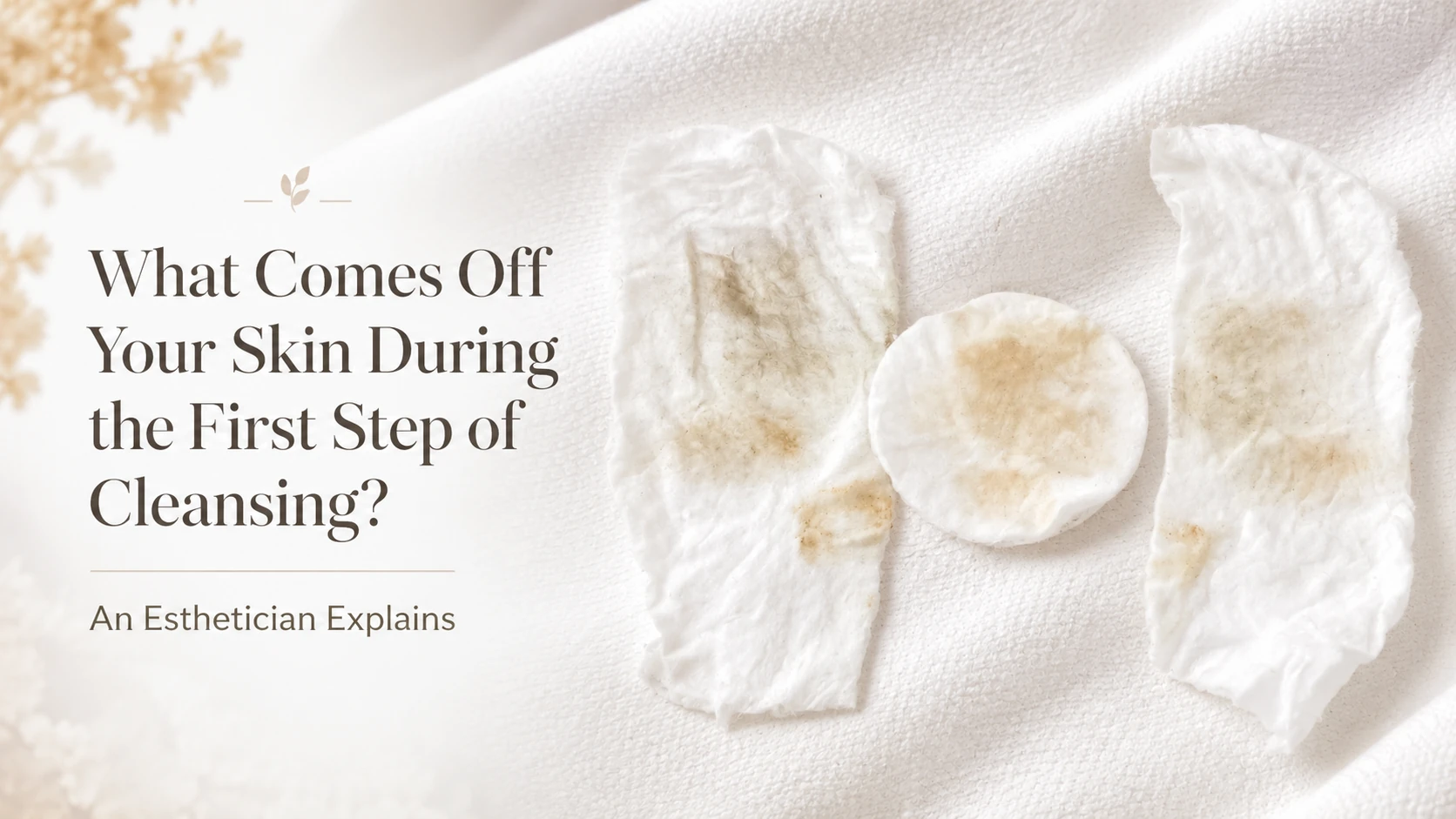
One of the most interesting examples happens with a client I have cared for regularly. She does not wear makeup, and she rarely applies lotion or other skincare products to her face. Yet every time I begin cleansing her skin, I notice visible residue coming off during the very first step of cleansing.
At first, this can seem surprising. If there is no makeup, sunscreen, or heavy skincare on the skin, what exactly are we removing?
The answer is that our skin is exposed to much more than cosmetics throughout the day. Natural oil, sweat, dead skin cells, environmental particles, and everyday buildup can remain on the surface even when the face looks completely clean.
This is one reason I believe cleansing should never be judged only by whether someone wears makeup. Proper cleansing is about removing what the skin naturally collects and produces over time, not simply washing away cosmetic products.
In this article, I want to explain what may come off the skin during the first step of cleansing, why it happens, and what it can teach us about maintaining a healthy skincare routine.
What Is Actually Coming Off the Skin?
When visible residue appears during cleansing, it does not necessarily mean the skin is “dirty” in the way we usually think of dirt.
Several things can naturally collect on the surface of the skin throughout the day.
Natural Oil and Sweat
Our skin continuously produces sebum, or natural oil, to help protect the surface. Sweat can also mix with this oil, especially around the forehead, nose, chin, and hairline.
Even if someone does not wear makeup, this combination can create a thin layer on the skin that becomes more noticeable once cleansing begins.
Dead Skin Cells
Skin naturally sheds dead cells every day. Some of these cells fall away on their own, while others remain mixed with oil and moisture on the surface.
During cleansing, especially with gentle massage, these loosened cells may become visible.
Environmental Particles
Our skin is constantly exposed to the environment.
Dust, pollen, air pollution, cooking particles, and other microscopic debris can settle on the face. You may not see them when looking in the mirror, but cleansing can lift away this invisible daily buildup.
Residue From Hair and Hands
Hair products, natural scalp oils, pillowcases, phones, and even touching the face throughout the day can transfer small amounts of residue onto the skin.
This is why I often remind clients that a bare face is not necessarily a completely clean face.
The skin is always interacting with its environment, and the first step of cleansing helps remove that daily accumulation.
Why the First Step of Cleansing Matters Even Without Makeup
Many people assume that if they do not wear makeup, there is very little to remove from the skin at the end of the day.
But makeup is only one part of what can sit on the surface.
During the day, the skin continues producing oil. We sweat. We touch our face without realizing it. Our skin comes into contact with pillowcases, hair, phones, indoor air, outdoor air, and tiny particles from the surrounding environment.
All of these can contribute to surface buildup.
I have also noticed that when someone uses very few skincare products, they may assume cleansing is less important. In reality, simple routines still benefit from consistent cleansing because the skin continues its normal functions whether products are applied or not.
This does not mean the skin needs aggressive washing.
In fact, over-cleansing can leave the skin feeling tight, dry, or uncomfortable. The goal is not to strip the skin until it feels “squeaky clean.” The goal is to gently remove surface buildup while respecting the skin barrier.
That balance is especially important for mature, dry, or easily sensitized skin.
What I Notice During the First Step of Cleansing
As an esthetician, I often learn a lot about the skin during the first few minutes of a facial.
The cleansing step is not just about removing surface residue. It is also a chance to observe how the skin responds to touch, water, and product.
With the client I mentioned earlier, I consistently notice visible buildup during the very first step of cleansing, even though she does not wear makeup and uses almost no skincare products.
Because this happens repeatedly, it reminds me that what we see on the skin is not always connected to cosmetics.
Sometimes the residue appears slightly gray, beige, or dull in tone. This can be a mixture of natural oil, dead skin cells, sweat, environmental particles, and everyday surface debris.
I do not automatically interpret this as a sign that the skin is unhealthy.
Instead, I see it as a reminder that the skin is constantly interacting with the environment and naturally shedding and producing substances throughout the day.
This is also why I prefer to begin with gentle cleansing and careful observation rather than aggressive scrubbing. The goal is to understand what the skin needs while protecting its natural barrier.
Why the First Step of Cleansing Should Stay Gentle
When people see visible residue coming off the skin, their first reaction may be to cleanse more aggressively.
But stronger is not always better.
Scrubbing too hard, using very hot water, or cleansing repeatedly can remove too much of the skin’s natural protective oil. Over time, this may leave the skin feeling tight, dry, rough, or more easily irritated.
For most people, a better approach is to use a gentle cleanser and allow enough time for the product to work across the entire face.
I usually recommend paying special attention to areas where buildup can collect more easily, such as around the nose, chin, hairline, and jawline. Gentle circular movements can help loosen surface debris without unnecessary friction.
For mature or dry skin, this is especially important. The goal is to leave the skin feeling clean and comfortable—not stripped.
If your skin feels very tight immediately after cleansing, that can be a sign that your cleanser or cleansing technique may be too harsh for your skin.
A Simple Cleansing Routine for Bare Skin
Even if you do not wear makeup, a simple evening cleansing routine can still make a noticeable difference in how fresh and comfortable your skin feels.
Start with lukewarm water rather than hot water. Hot water can feel relaxing, but it may leave dry or mature skin feeling more stripped.
Apply a gentle cleanser and massage it over the face for about 30 to 60 seconds. Use light pressure and pay attention to the nose, chin, jawline, and hairline, where oil and daily buildup can collect.
Rinse thoroughly and gently pat the skin dry with a clean towel.
After cleansing, follow with a hydrating toner, serum, or moisturizer if your skin needs extra comfort.
For someone who does not wear makeup or heavy sunscreen, one gentle cleanse in the evening may be enough. Double cleansing is not automatically necessary for everyone.
The most important thing is how your skin feels afterward. Clean skin should feel fresh and comfortable—not tight, squeaky, or irritated.
When Visible Buildup May Need More Attention
Most visible residue during cleansing is simply part of normal daily buildup. However, there are times when the skin may need a closer look.
If the skin feels unusually rough, flaky, very oily, or congested even after regular cleansing, the issue may be more than surface debris alone.
In some cases, inconsistent cleansing, dehydration, excess oil, or a buildup of dead skin cells can make the skin look dull or uneven.
This is where gentle exfoliation may sometimes help, but it should be chosen carefully based on skin type and sensitivity.
I do not recommend immediately reaching for a strong scrub or using exfoliating acids every day. Too much exfoliation can weaken the skin barrier and create more dryness or irritation.
A better approach is to keep the routine simple, observe how the skin responds, and make changes gradually.
If you notice persistent scaling, redness, pain, itching, or other concerning changes, it is best to speak with a dermatologist or another qualified medical professional. As an esthetician, my role is to support healthy cosmetic skincare habits, not to diagnose medical skin conditions.
Can You Prevent This Daily Buildup?
You probably cannot prevent all surface buildup, and you do not need to.
The skin naturally produces oil and sheds dead skin cells as part of its normal function. The goal is not to keep the skin perfectly “clean” every minute of the day.
Instead, focus on a few simple habits that can reduce unnecessary residue.
Wash pillowcases regularly, especially if you have oily hair or use styling products. Clean your phone screen often. Try not to touch your face repeatedly throughout the day, and keep hair products away from the facial skin whenever possible.
At the end of the day, a gentle cleanse helps remove what has accumulated without disturbing the skin barrier.
For me, the most important lesson is that cleansing is not only for people who wear makeup.
Even bare skin has a daily story on its surface—oil, sweat, dead skin cells, and environmental exposure. A simple, consistent cleansing routine helps reset the skin at the end of the day and prepares it for the next steps in your skincare routine.
Final Thoughts
One of the most valuable things I have learned through years of working with skin is that what we see on the surface does not always tell the whole story.
A person may wear no makeup, use very few skincare products, and still have visible residue appear during the first step of cleansing. That does not automatically mean the skin is dirty or unhealthy. It simply reflects how active and exposed our skin is every day.
Natural oil, sweat, dead skin cells, environmental particles, and everyday contact all leave small traces behind.
That is why I see cleansing as more than just removing makeup. It is a simple daily reset for the skin.
The best cleansing routine is not the strongest one. It is the one that removes buildup while leaving the skin comfortable, balanced, and supported.
For healthy-looking skin, consistency and gentleness matter more than scrubbing harder.
Frequently Asked Questions
Do I still need to cleanse if I do not wear makeup?
Yes. Even without makeup, the skin can collect natural oil, sweat, dead skin cells, dust, and environmental particles throughout the day. A gentle evening cleanse can help remove this buildup.
Is visible residue during cleansing always a sign of dirty skin?
No. Visible residue can simply be a mixture of normal skin oils, dead skin cells, sweat, and environmental debris. It does not automatically mean the skin is unhealthy or poorly cared for.
Should I double cleanse if I do not wear makeup?
Not necessarily. If you do not wear makeup or heavy sunscreen, one gentle cleanse may be enough. Double cleansing can be helpful in some situations, but it is not required for everyone.
How should skin feel after cleansing?
Ideally, your skin should feel fresh, soft, and comfortable. If it feels very tight, dry, or irritated, your cleanser or cleansing method may be too harsh.
Can I scrub harder to remove more buildup?
I do not recommend it. Aggressive scrubbing can irritate the skin and weaken the skin barrier. Gentle cleansing with consistent technique is usually a better approach.
Leave a Reply